

In 2024, the average cost of warehouse space hit $8.31 per square foot, contributing to a total cost increase of over 8% in just two years, according to a recent warehousing cost survey. For many businesses, this rising expense reinforces the view of warehouses as unavoidable cost drivers.
However, the truth is that perspective misses a critical opportunity. When optimized, warehousing and the supply chain work together as a strategic asset that drives tangible efficiency gains, reduces operational expenses and strengthens your competitive position. With a well-managed warehouse, you directly improve supply chain performance and position your business for sustainable growth.
The Advantages of a Modern Warehouse
Today’s competitive landscape demands more from warehousing operations than passive storage. Businesses gain measurable advantages such as:
- Enhanced visibility: Live data integration provides granular control over every supply chain touchpoint.
- Process optimization: Systematic workflows replace ad-hoc operations to eliminate inefficiencies.
- Data-driven decisions: Actionable insights enable proactive planning rather than reactive problem-solving.
- Competitive edge: Advanced warehouse capabilities can set businesses apart from competitors.
Shifting From a Cost Center to a Strategic Asset
Traditional warehouses simply hold inventory until it’s needed. However, modern facilities actively drive business performance through real-time data integration and process optimization. Driven by e-commerce growth and rising customer expectations for speed, this transformation has accelerated rapidly, with companies now leveraging warehouses for precise control over supply chain operations.
The productivity gains are also substantial. Warehouse automation can increase productivity by between 25% and 70%, and these improvements translate directly to business advantages in fulfillment speed, cost management and customer satisfaction.
The Core Functions of a High-Efficiency Warehouse
Modern warehouses serve as operational nerve centers through four foundational functions, which work together to transform passive storage into active value creation:
- Inventory control: First, inventory control provides the instant visibility needed to prevent costly stockouts, while a simple storage space can only tell you what arrived last week.
- Order fulfillment: Beyond tracking what you have, effective order fulfillment transforms manual picking processes into streamlined systems that reduce cycle times and eliminate errors.
- Returns processing: Equally important, returns processing becomes a value-recovery operation rather than an administrative burden.
- Data management: Finally, data management pulls everything together by converting raw transaction information into actionable intelligence that drives intentional decisions across your entire operation.
6 Ways an Optimized Warehouse Boosts Efficiency
These core functions deliver specific, quantifiable benefits that directly impact your bottom line. From market differentiation to cost reduction, purposeful warehouse management creates advantages that set market leaders apart.
1. Maximizing Inventory Accuracy
As the bedrock of supply chain reliability, inventory accuracy eliminates guesswork by using modern warehouse management systems. These software solutions use live data to reduce safety stock that ties up your working capital. When you know exactly what you have and where it’s located, you prevent both costly stockouts and excess inventory carrying costs.
Inventory shrink remains a persistent challenge, though. In fact, retailers experienced a 19% increase in merchandise theft incidents between 2023 and 2024. That’s where warehouses with real-time asset management come in. They can address these challenges through systematic tracking at every touchpoint.
2. Increasing Fulfillment Speed
Order cycle times depend directly on efficient warehouse processes — streamlined pick paths, automated sorting systems and intentional inventory placement all reduce the time between order receipt and shipment.
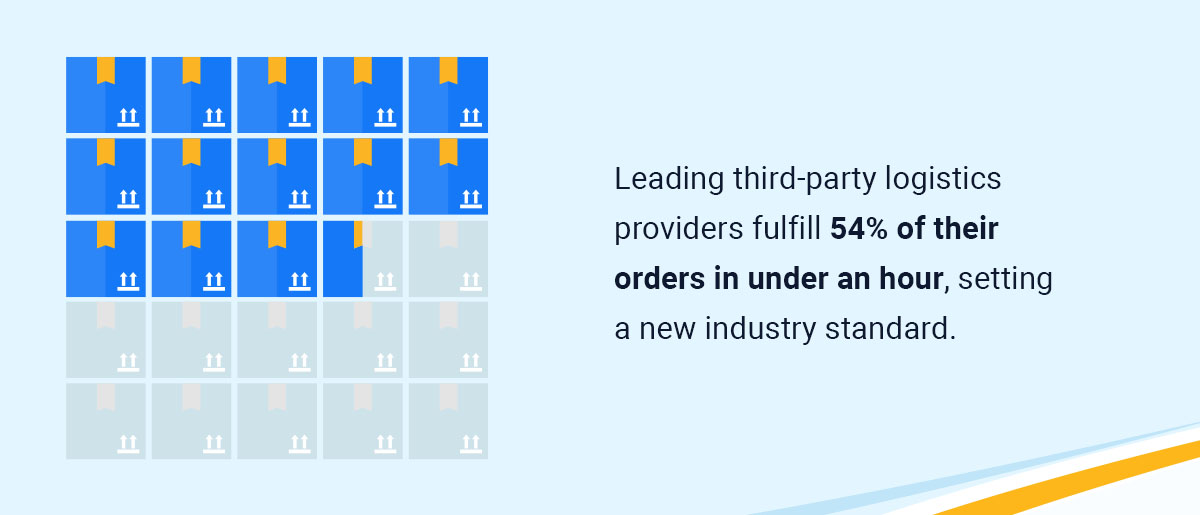
Your ability to retain customers now hinges on your fulfillment speed. As a benchmark, leading third-party logistics providers fulfill 54% of their orders in under an hour, setting a new industry standard.
3. Slashing Operational Costs
Warehouse efficiency generates direct cost savings across multiple dimensions. Refined facility layouts maximize the use of expensive real estate, while reduced picking and shipping errors eliminate the costs associated with returns and replacements. Intentional inventory placement further cuts expenses by minimizing unnecessary movement.
Beyond physical operations, labor improvements deliver additional savings by streamlining workflows and guiding warehouse management systems, increasing workforce productivity without excess motion.
Transportation costs also decrease when facilities coordinate outbound shipments intelligently, a principle that extends to optimizing transportation routes across your entire network.
4. Streamlining Reverse Logistics
Returns management often receives insufficient attention despite its significant impact on profitability. Your warehouse serves as the central hub for efficiently processing returns, inspecting products and routing items back into available inventory.
Fast inspection and disposition decisions through an efficient reverse logistics process mean resalable items return to inventory quickly, minimizing revenue loss and reducing the time products spend out of circulation.
5. Providing Market Flexibility and Scalability
Rigid supply chains become fragile when market conditions shift. A well-managed warehouse enables you to quickly scale up during seasonal demand peaks or scale down during slower periods.
This flexibility becomes particularly valuable when entering new geographic markets, where partnering with an established provider eliminates the need for massive infrastructure investment.
Different industries face unique scalability challenges, too. Providers who offer solutions for various industries understand these nuances and can configure operations accordingly.
6. Enhancing Safety and Security
Professional warehouse management minimizes operational risk through standardized processes that reduce workplace accidents and ensure regulatory compliance.
A secure, well-organized facility protects your inventory assets and maintains employee safety. This goes beyond loss prevention to become a crucial element of operational continuity.
From proper equipment maintenance to clear safety procedures and regular training, comprehensive safety protocols protect both your workforce and your bottom line by reducing injury rates and associated costs.

Enhance Your Supply Chain With Corrigan Logistics
At Corrigan Logistics, we turn these principles into tangible results. With nearly 100 years of experience in supply chain management, we deliver customized solutions backed by an asset-based fleet and nationwide infrastructure. Our team specializes in warehouse efficiency, from inventory management to final mile delivery.
Whether you’re looking to reduce costs, increase fulfillment speed or scale for growth, we provide the expertise and technology you need to optimize operations without massive capital investment. Get your free quote and discover how strategic warehousing drives competitive advantage today!