
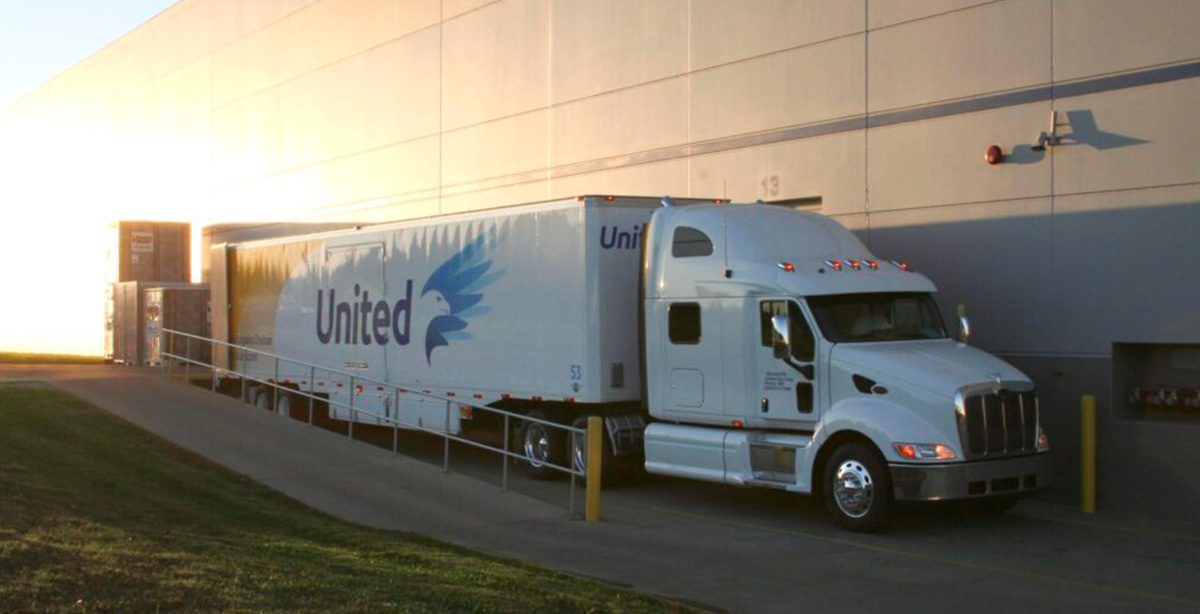
In 2024, inventory distortion costs businesses over $1.7 trillion globally. Most losses are not due to theft or shifts in consumer demand but to a phenomenon called phantom inventory. An example of phantom inventory is when your inventory management system reports 500 units on hand, but the shelf holds 480. This discrepancy rarely starts on the sales floor. It begins at the receiving dock.
For logistics managers, the receiving area is the financial firewall of their operations. It is the single point where liability transfers from the carrier or vendor to your balance sheet. If your team or provider treats this process as a simple administrative task, they are exposing your business to preventable losses that bleed margins and damage vendor relationships.
Understanding the importance of receiving, inspection and warehousing protocols is the only way to insulate your supply chain from these hidden costs.
Why Inspection Is More Than Counting Boxes
A true, competitive inspection process is forensic in nature. It assumes that errors exist and actively seeks to identify and correct them before they enter your inventory ecosystem.
The Tipping and Tilting Standard
A pallet that has been dropped or tipped during transit may look pristine on the outside if it has been re-wrapped or if the damage is internal. A rigorous inspection protocol involves checking tilt indicators and shock sensors on sensitive freight. It includes examining the structural integrity of the corners. Crushed corners on a master carton often indicate a drop that damaged the individual units inside.
In addition to crushed corners, staff should look for indicators of a forklift mishap en route:
- Water stains
- Retaped seams
- Punctures
Quality Assurance Sampling
For commodities, a visual scan may suffice. However, for high-value electronics, medical devices or retail fixtures, inspection requires a statistical quality assurance (QA) sampling approach. This approach means opening a designated percentage of master cartons to verify the condition of the inner packs. Are the contents rattling? Is the protective styrofoam intact?
When done correctly, effective receiving in warehousing catches a batch of manufacturing defects at the dock, allowing you to reject the shipment immediately. The alternative is discovering the issue three months later when a customer returns a broken product.
Compliance Verification
Physical damage is not the only threat. Data damage is equally costly. If a vendor ships goods with unreadable barcodes, incorrect stock-keeping unit (SKU) labels or missing expiration dates, those goods become phantom inventory. They sit in your warehouse, unpickable and unsellable. Validating compliance during receiving ensures that every item entering your facility is ready for immediate deployment.
The Dangers of Skipping Inspections in Warehousing
The moment you sign a Bill of Lading (BOL) without noting exceptions, the legal and financial liability for that freight transfers to you. The carrier is absolved, and the vendor is paid. If you discover damage 24 hours later, the claim is almost impossible to win because you cannot prove the damage did not occur inside your facility.
Rubber Stamp Risk
Trusting a manifest is a gamble in which the house almost always wins. When your receiving team rubber stamps a delivery to clear the dock quickly, they are essentially writing a blank check for any vendor errors or carrier negligence. This quick approval is the primary driver of retail shrink.
Hidden Costs of Paperwork Errors
Theft is often considered the primary reason for inventory loss, but the data tells a different story. Retail shrink can also be due to administrative and paperwork errors, such as receiving the incorrect item, entering the wrong quantity or failing to record a damaged unit. These are unforced errors that corrupt your data and trigger a cascade of supply chain failures.
The Value of First-Time Accuracy
Achieving precision at the receiving dock protects your downstream operation from costly redundancies. To understand the value of this accuracy, consider the alternative trajectory of a damaged unit that slips past warehouse receiving:
- It is received into stock. Cost: labor + space
- It is picked and shipped to a B2B client. Cost: outbound shipping + packaging
- The client receives the broken item and demands a refund. Cost: brand reputation damage
- You pay to ship it back. Cost: return shipping
- You rush-ship a replacement unit. Cost: expedited shipping

A single missed inspection at the dock can result in shipping costs tripling, while simultaneously eroding the trust of a key client.
Anatomy of a Competitive Receiving Process
Preventing these losses requires a structured, consistent workflow. A competitive process for receiving in warehousing is built on three pillars that prioritize accuracy over speed.
1. Prereceipt Planning and ASNs
The process begins days before a truck backs into the bay. Best-in-class operations mandate advanced shipping notices (ASNs) from all vendors. An ASN allows the warehouse team to prepare the necessary floor space, schedule the right labor and identify any discrepancies before the physical goods arrive. Without masterful logistics planning, your receiving dock is reacting to chaos rather than executing a plan.
2. Case vs. Pallet
A common pitfall in high-volume warehouses is counting pallets instead of cases. A manifest may list 10 pallets containing 500 cases. If the vendor short-stacks the center of the pallet, you might only receive 480 cases. A proper physical check involves verifying the tie-high configuration — cases per layer multiplied by layers per pallet — to ensure the math aligns with the manifest.
3. The Three-Way Match
Three-way matching is the ultimate documentation discipline. Before any product is put away, the receiving team must reconcile three documents:
- The purchase order (PO), which details what you asked for
- The packing slip/BOL, which shows what the vendor claims to have sent
- The physical count, which is what you actually received
Discrepancies are flagged immediately. If the PO called for 100 blue widgets, the packing slip lists 100 red widgets, and you received 90 green widgets, stopping that shipment at the dock is the only way to prevent downstream accounting nightmares.
Outsourcing to a Strategic Gatekeeper
Maintaining this level of scrutiny in-house is resource-intensive. It requires specialized training and a culture that prioritizes precision over speed. Forward-thinking companies outsource this critical function to a partner like Corrigan Logistics.
For over 90 years, we’ve brought global best practices to your receiving dock. We act as a neutral auditor, providing an unbiased source of truth about your inventory without the internal pressure to rush errors into stock. Our warehousing logistics services — including environment-controlled storage and white-glove inspection — ensure even the most delicate inventory remains pristine, whether handling industrial machinery or sensitive electronics.

Protect Your Profit Margin With Corrigan Logistics
The importance of receiving and inspection in warehousing is about protecting your inventory and your profit margin. Every error caught at the dock is a future dispute avoided and a protected profit margin. By treating receiving as a financial firewall, you ensure your physical inventory matches your digital records, eliminating the phantom inventory that plagues so many bottom lines.
Do not let your receiving dock be the weak link. Partner with Corrigan Logistics for warehousing logistics services that prioritize accuracy, security and asset protection. Contact us today to secure your supply chain.